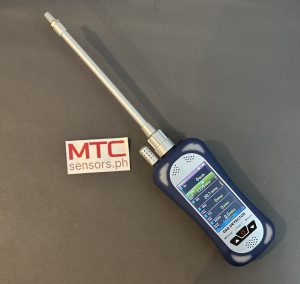
Portable 6-in-1 Multi-Gas Detector with Built-in Pump
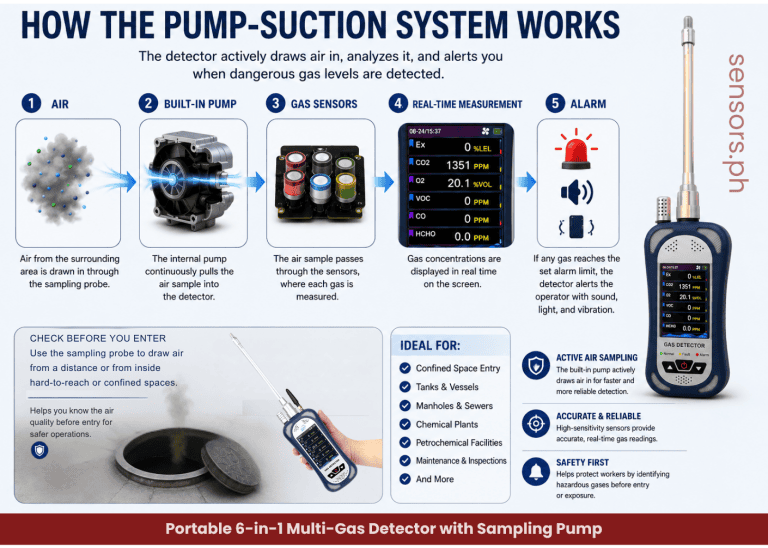
This portable multi-gas detector is designed to actively draw air into the instrument using a built-in sampling pump. In simple terms, the detector “sniffs” the surrounding air and continuously checks the sample for potentially dangerous gases.
Unlike diffusion-type gas detectors, which depend on gas naturally reaching the sensors, the pump-suction design actively pulls an air sample into the detector for measurement. This makes it particularly useful when checking an area before a worker enters, investigating a suspected gas leak, or sampling air from a location that is difficult or unsafe to approach directly.
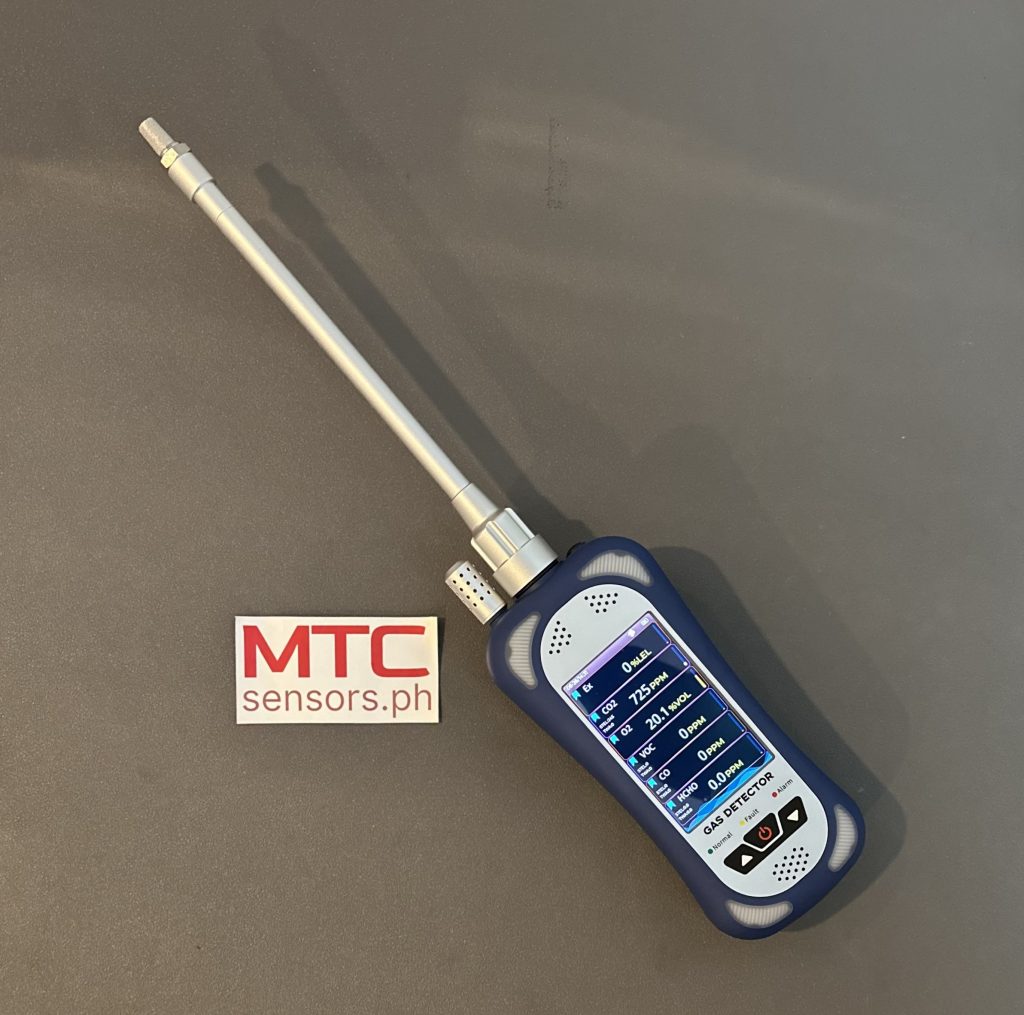
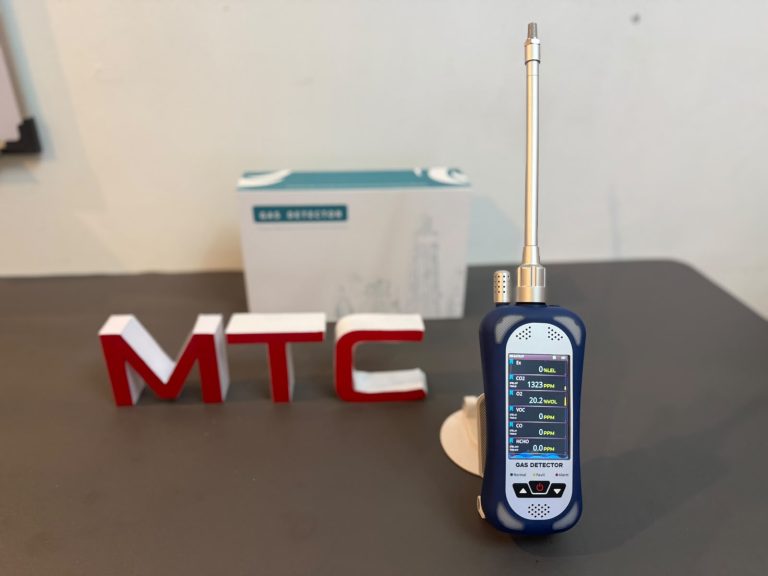
The large color display provides simultaneous, real-time gas readings, allowing operators to quickly understand the condition of the surrounding atmosphere.
What Can It Detect?
Depending on the sensor configuration, the detector can simultaneously monitor multiple gases. The unit shown is configured for:
- Combustible Gas (Ex / %LEL) – Detects the presence of flammable or combustible gases and vapors and indicates their concentration as a percentage of the Lower Explosive Limit.
- Carbon Dioxide (CO₂) – Monitors carbon dioxide concentration in the sampled air.
- Oxygen (O₂) – Detects oxygen-deficient or oxygen-enriched atmospheres.
- Volatile Organic Compounds (VOC) – Monitors volatile organic compounds that may be present in industrial environments.
- Carbon Monoxide (CO) – Detects carbon monoxide, a toxic gas that can be dangerous even when it cannot be seen or smelled.
- Formaldehyde (HCHO) – Measures formaldehyde concentration for applications where this hazardous vapor may be present.
Multiple gases can be displayed at the same time, giving the operator a quick overview of atmospheric conditions.
How Does the Pump-Suction System Work?
Why Choose a Pump-Suction Gas Detector?
The detector combines active air sampling and multi-gas monitoring in a portable instrument designed for industrial gas detection, field inspection, maintenance, and safety checks. Its built-in pump actively draws air into the detector rather than waiting for gases to naturally reach the sensors, while optional sampling accessories allow operators to check the atmosphere from a distance or in difficult-to-reach locations. Gas concentrations are continuously displayed in real time on the color screen, with each gas channel clearly identified for quick and easy assessment. Depending on the installed sensor configuration, the detector can monitor multiple gases simultaneously and provide STEL and TWA exposure information for applicable toxic gases.
Applicable Gases: Flammable gases, toxic/harmful gases, oxygen, etc.
Sampling Method: Built-in pump type
Display: Liquid Crystal Display (LCD)
Response Time: ≤ 30 seconds
Ambient Temperature: -25°C to +55°C
Relative Humidity: 20–93% RH
Supply Voltage: DC 3.7 V
Battery: 5600 mAh rechargeable lithium-ion battery
Charging Time: < 5 hours
Continuous Working Time: ≥ 8 hours
Product Weight: Approx. 418 g
Operating Pressure: 86–106 kPa
Dimensions: 214 × 80 × 36 mm (L × W × H), excluding crocodile clip
The portable pump-suction multi-gas detector is suitable for a wide range of industrial and safety applications, including:
Oil & Gas
Atmospheric testing around tanks, pipeline, process equipment and maintenace areas.
Confined Space Entry
Pre-entry and ongoing atmospheric checks for tanks, vessels, manholes, pits and similar spaces.
Chemical and Petrochemical Plants
Checking work areas where combustible gases, toxic gases or vapors may be present.
Wastewater and Sewage Facilities
Atmospheric testing around treatment facilities, underground spaces, tanks and drainage systems.
Manufacturing Facilities
Gas monitoring during maintenance, production and inspection activities.
Warehouses and Storage Areas
Checking enclosed areas where gases or vapors may accumulate.
Marine and Shipboard Applications
Atmospheric testing of tanks, machinery spaces, enclosed compartments and other restricted areas.
Emergency and Maintenance Work
Portable gas checking when investigating suspected leaks or potentially hazardous atmospheres.